The Victrola
The Glass MenagerieThe Victrola is a domestic phonograph that becomes one of Laura Wingfield’s most important means of action in The Glass Menagerie. She winds it when she cannot answer her mother, when she must face a visitor, and after a painful disappointment. Its music offers a fragile shelter, but it also belongs to a larger pattern: sound carries the emotional pressure of Tom Wingfield’s memory and links Laura’s private vulnerability to the play’s form.
Identity and Place in the Household
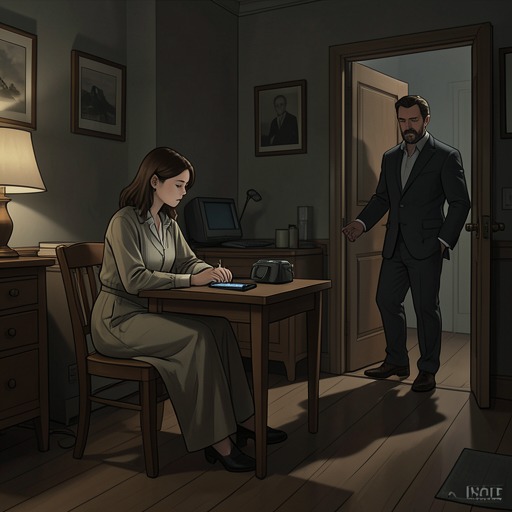
The Victrola is part of the Wingfield home and a familiar instrument Laura can operate herself. When Amanda Wingfield demands to know what Laura has been doing instead of attending business college, Laura begins to rise, crosses to the Victrola, and winds it. Amanda’s question interrupts the action; Laura releases the handle and returns to her seat without answering. The small sequence makes the machine more than background furniture: Laura reaches for it at the moment when direct speech becomes difficult, then retreats when her mother calls her back into the conversation.
Amanda later includes the phonograph records left by Mr. Wingfield among the household’s painful reminders of the past. In imagining the family’s future without a business career, she asks whether they will be left to stay home, watch parades, amuse themselves with the glass menagerie, and play those worn-out records. The records thus carry an inheritance that is both usable and burdensome: they can still be played, yet their connection to the absent father makes domestic repetition feel like a reminder of loss. Amanda’s question places the Victrola within the family’s economic anxiety as well as its memory of Mr. Wingfield.
Laura’s Music and the Play’s Soundscape
The play’s production notes distinguish the recurring tune called “The Glass Menagerie” from the music played on the Victrola. The recurring tune is described as a delicate, sad thread that slips in and out of the action, connecting the narrator, who occupies a separate time and place, with the subject of his story. It returns between episodes as an expression of nostalgia and is identified primarily as Laura’s music, clearest when the play focuses on her and the fragile beauty of glass. The Victrola belongs to the same sound-centered dramatic world, but the evidence does not identify it as the source of that recurring theme.
Music begins as the play’s memory-frame is established, and Tom explains that memory is dimly lighted, sentimental, and nonrealistic: in memory, events seem to happen to music. The Victrola’s appearances give that principle a concrete domestic form. Its winding mechanism and records make music something Laura can summon through a physical act, while the broader score lets sound persist beyond any single action. The result is a contrast between Laura’s intimate use of the machine and the play’s larger, shifting soundscape, which accompanies Tom’s narration and the scenes he recalls.
Actions and Dramatic Uses
Laura winds the Victrola again when Amanda urges her to open the door for the expected gentleman caller. Laura first returns through the portieres, hurries to the phonograph, winds it frantically, and turns it on. A distant, scratchy rendition of “Dardanella” softens the air and gives her strength to cross the room; she slips to the door and cautiously opens it. Tom then introduces her to Jim O’Connor. The sequence ties the Victrola directly to Laura’s approach toward a social encounter: music does not remove her fear, but helps her move through it.
The machine returns after Jim’s visit has taken a painful turn. Laura rises unsteadily and crouches beside it to wind it, while a projected legend warns that things can turn out badly. Amanda comes back carrying fruit punch and macaroons, unaware at first that Jim is engaged. After he leaves, she tells Tom the news; when he answers from the kitchenette, she summons him into the living room. The Victrola’s presence in this aftermath places Laura beside the same familiar object as the household’s hopes for a caller give way to disappointment.
Amanda’s response is to say that she does not believe she would play the Victrola. Her remark follows the discovery that the visitor who seemed to offer Laura a possibility is already engaged, and it turns the household instrument into a measure of the evening’s collapse: Amanda’s usual confidence in the comforts or routines of home gives way, at least momentarily, to silence. The play does not show what record Laura might have chosen at this point; what it does show is her crouched beside the machine and Amanda’s explicit reluctance to set it playing.
Memory, Fragility, and the Ending
The Victrola’s significance extends beyond its appearances as a prop because music is one of the play’s principal links between present narration and remembered events. The recurring tune returns between episodes, while the story’s sound is shaped by the conditions of memory rather than realistic continuity. Against this structure, the Victrola is at once an ordinary object in the family apartment and a visible means by which Laura tries to give herself enough strength to act. Its operation is modest and repetitive: she winds it, the record sounds, and for a moment she can face what is in front of her.
At the end, the play does not present the Victrola as the source of the music that accompanies the final scene. After Tom smashes his glass and goes out onto the fire escape, the dance-hall music grows louder while he speaks. Inside, Amanda comforts Laura; Laura eventually lifts her head to smile at her mother, and then blows out the candles. Tom’s closing account connects his later travels to images of familiar music and transparent colored glass, and admits that he cannot leave Laura behind in memory. The Victrola’s earlier role therefore resonates with, but should not be confused with, the play’s final sound and imagery: the household phonograph is one recurring point of contact between Laura and music, while Tom’s remembered music and glass extend that connection beyond the apartment.
In the domestic scenes, the Victrola gives Laura an action when speech or social approach becomes difficult; in the play’s design, music makes memory audible and binds separated moments together. Its force lies in that double use. The object remains ordinary and limited, but the repeated gesture of winding it brings sound into scenes of evasion, courage, and disappointment, while the wider musical pattern makes Laura’s delicacy part of the work’s structure.